How I found my purpose in the space industry

A bit more of a philosophical post this time.

“There are no right answers to wrong questions.”

Ursula K. Le Guin

When I graduated high school, I chose to study science instead of a music, because “I knew too many poor, dissatisfied musicians.” The punchline to this joke is that once I had spent over a decade as a medical scientist and completed my PhD in Immunology, I left research science to become an entrepreneur because I now knew just as many poor, dissatisfied scientists.

Becoming an entrepreneur was the first time I’d been able to take full advantage of the skillsets I’d developed in both fields. In my understanding, the primary skill of a successful career scientist is the implementation of a specific strategy of questioning and results analysis, otherwise known as the scientific method. The primary skill of a successful professional in the arts is the implementation of the creative process (a cycle of recombining and paring back raw materials, iterating towards to a specific, novel purpose). In my mind however, the distinguishing requirement of being an entrepreneur is the ongoing practice of both modes of thinking. They are especially powerful when combined with the ongoing practice required of business owners: an intense focus on providing value to the paying customer, by falling in love with customer problems, not your own solutions.

The downside of going into the business world after over a decade in each of these other fields, was being hyper aware of the pressure to prioritise the inherently reductive financial metric of Return on Investment or ROI, because it’s so much more difficult to measure the intangible value that comes from purely scientific or artistic pursuits. Just this week, I found myself having to clarify what I meant when I said I feel wealthy as a result of my artistic and scientific experience. This experiential wealth doesn’t necessarily pay my power bills or fund my next international trip, but it adds richness to my life nonetheless.

In as much I think I have a handle on what it means to talk about (life) purpose, I can only conceive of it in terms of this more intangible wealth: I think it’s what you are achieving when you are in the habit of completing tasks that yield impactful results (whether or not there are financial metrics to capture that impact), in areas where only someone with your experience (from working in fields whose primary purpose is generating these intangible benefits) could do it.

One key perspective I’ve gained since joining the startup ecosystem was as a result of meeting a number of inspiring not-for-profit organisations (I previously hadn’t had much experience with this sector). Just as with scientists who are aiming to achieve some fundamental understanding of nature, or artists who are aiming to create some new form of self expression, these not-for-profit organisations exist to create a social good, while also lacking an explicitly financial ROI. All three groups are comparable in that they face this conundrum with trying to quantify the intangible value produced in a world where the dollar is king, yet the not-for-profits tend to be different in that they face hard financial realities that are much more like startups: They may not be for-profit, but they had better at least generate enough revenue to cover their costs or else they won’t be around for very long.

The problem I saw within the arts and science sector, but couldn’t articulate until I was outside of them, was that the deeply institutionalised funding model has led to multiple layers of arbitrators between the people spending the funds, and the original funding source (often the taxpayer). This has meant that as public-sector funding has dried up in recent decades, the professional scientists and artists on the front lines have often not known where to start when it comes to replacing those funds, and have been competing over an ever-smaller pool of grant funding. The high ideal of not being motivated by money, has led to a generation of scientific or artistic professionals who (mostly) lack knowledge around what the private sector requires in order to raise any money, whilst most investors who are aware of and motivated by these more intangible benefits, at least want to see scientific or artists’ organisations find a way to cost-neutral status, as is the case with sustainable not-for-profits.

So, having crossed the chasm from academia to industry, I think it is useful for me to communicate what I’ve observed back to the academics who may be on the edge of making the leap. Moving to industry does not mean giving up on the pursuits that yield more intangible value, but it does mean at least doing the work of a not-for profit to show cost-neutrality. The compromises this will mean to your work will vary from field to field (and some things obviously cannot be funded this way for reasons intrinsic to that field of endeavour), but at this point – given the amount of time I know people are spending on grant writing – I think the time spent exploring a more private sector-focussed, patronage model of funding, may compare favourably.

To be clear, Exodus Space Systems is a for-profit company, because it will take significant funds to make the kind of impacts that we are aiming towards. Space offers a literally endless array of possibilities for both for-profit manufacturing and not-for-profit research of intangible benefits. The reason I bring up not-for-profits at all is that this was how I came to the understanding that there can be a place on that continuum (between not-for-profit, and profit maximised) where Exodus can be both a profitable company, and also one that delivers the kind of intangible benefits that will make our work truly meaningful.

Why space though? Why not any other entrepreneurial pursuit? And “why follow the eccentric billionaires with their pet projects when there are so many problems that need solving right here on Earth?”

Space has two unique factors going for it that appeal to me, quite apart from what I think is a primal need of humanity to explore the unknown. The first appeals to my creative way of thinking, in that space is an almost entirely new environment for humanity to be working in. Above, I wrote that the creative process is about iterating towards a specific, novel purpose. Given that a major form of resistance that creatives meet is the “we’ve always done it this way” mindset, space neatly sidesteps that resistance because it is still a very new environment. There’s almost no aspect of space technology that suffers from the institutional closed-mindedness you might find in other industries, and so as long as you respect the laws of physics, the opportunities to create truly new innovations in space are endless.

The second factor appeals to my scientific way of thinking, in that space is literally removed from the world, and from the interference of everyday life, which allows us to perform experiments in a truly independent manner. While any scientific experiments in space have to contend with the harsh environment of space, that environment is largely constant and predictable, and able to be fully isolated from physical, biological or social factors that could lead to compromises in similar experiments done on Earth.

If we take the important question of the multiple sustainability challenges right here on Earth, I think that space technology is so important precisely because it gives us the opportunity to conduct the work which will address those challenges in a creative and independent way, in a setting where the only passing grade is 100%.

Even now, Earth observation by orbiting satellites has led to a paradigm shift in how we monitor environmental change around the world. Greenhouse gas and aerosol emission, land-use changes like deforestation, and the expanding practice of super-trawlers harvesting the world’s deep ocean fisheries, are just three issues which would be almost impossible to measure comprehensively or objectively without space technology.

Deep space exploration by both robotic and crewed spacecraft will only accelerate the progression of these types of impactful solutions, because the journey to the Moon, Mars or asteroids will inevitably require the development of new technology which will contribute to our sustainability efforts worldwide. Consider one technology on NASA’s roadmap: a fully closed-loop Environmental Control and Life Support System (ECLSS). Just as the need to recycle urine for drinking water on the Space Shuttle led to reverse osmosis systems which now provide clean water for millions around the world, the development of efficient carbon capture systems for longer duration spaceflight offers the prospect of new techniques that will be scalable for industrial climate change mitigation. The use-cases for these solutions might be present in Earth-based settings, but it will never as essential as it is in space, where these technologies are on the critical path.

What about food production for astronauts on these long-duration missions? Will the creation of low-maintenance food crops suited for spaceflight also help to lower fertiliser or water consumption by those crops on Earth? Will techniques to better preserve foodstuffs for astronaut consumption mean less food wastage, and therefore less need to continuously expand new food resources to feed a growing population?

The challenges are immense, but hopefully you can tell that I’m pretty excited about the potential of space technology to address them, and that the space industry has an especially powerful incentive to solve those problems.

I also feel fortunate that I now have a much better understanding of the process of trying to raise private funds, and of the people from whom I’ll be raising those funds. The net effect is that I still consider myself an artist and a scientist at my core, but I’m more optimistic than ever that being an entrepreneur enables better control of how to fund those pursuits.

All of this makes me feel like I’ve found a path to working on a business will not only have a positive ROI, but also have real impacts in progressing sustainable solutions. It provides a platform for the scientific and artistic endeavours that will yield these more intangible benefits, and having a business that successfully walks this line is something where someone with my skillsets has a good chance of being successful. The fact I get to fulfil a lifelong dream to work in the space industry is a bonus on top, and if that’s not finding my life’s purpose, I’m not sure what is.
London Tech Week ’22

It as has been three years since Exodus last came to London, and so much has changed since then. In 2019, we learnt about the UK’s Enterprise Investment Scheme and how an EIS accredited company can attract significant support from early stage investors due to government tax incentives. Now, with the equivalent Early Stage Innovation Company status in Australia, we can offer Australian early-stage investors the same types of incentives to what they receive here in the UK.

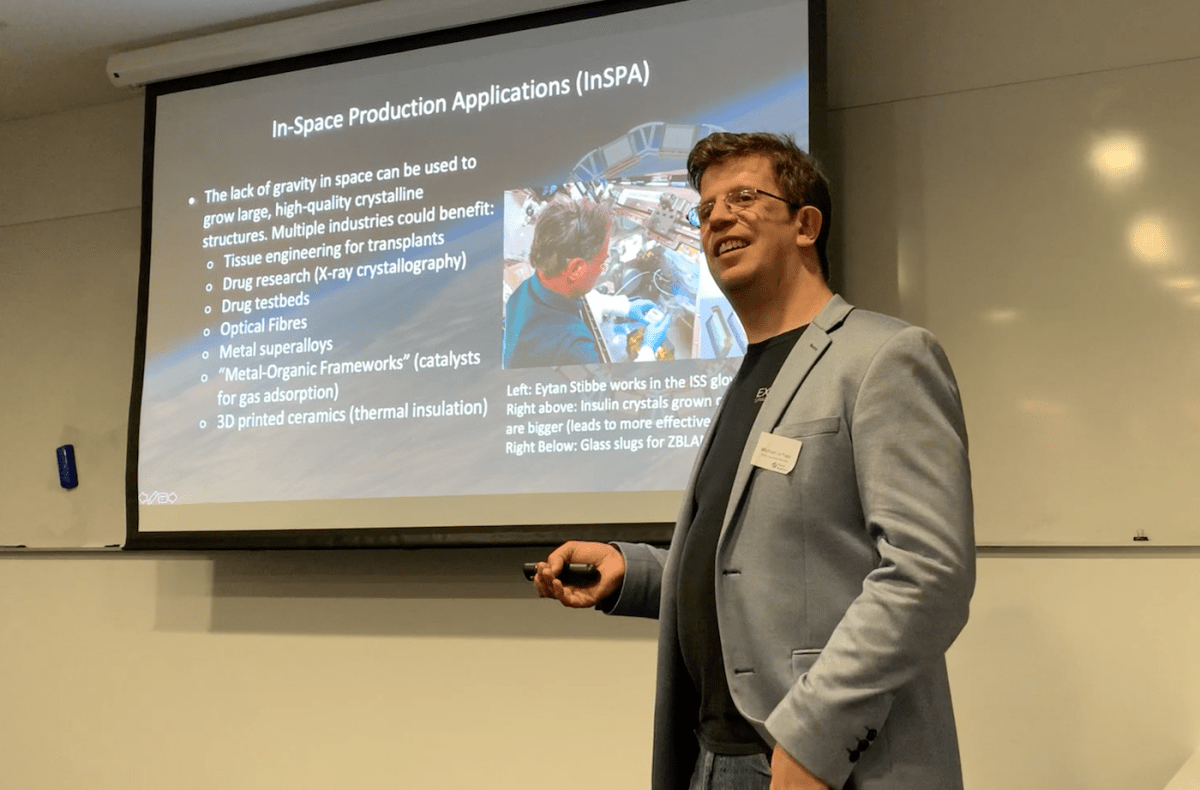
Our big news of the last few months is that we have pivoted focus from our Kinetic Solution for Space Debris (KiSSD) to our Carousel Spacelab project, which is an enabler for In-Space Applied Research and Manufacturing (ISARM) applications. The Carousel Spacelab will provide a new platform to researchers and company R&D departments, enabling them to expand on over 20 years of research on the International Space Station, which has the potential to change industries like drug discovery, metallurgy, optical fibres, and more.

Our second trip to London has allowed us to experience once again the big-thinking optimism that the London tech scene is known for, but also approach the UK space sector with a much better understanding of the global space industry’s supply chain. Whilst finding a cost-effective and scalable solution to the technical problem of space debris is important, we have found that it will likely still be a few years before active debris removal will be a big enough market to make a company like Exodus viable. Instead, our Carousel Spacelab concept (a small, free-flying space centrifuge) is the result of significant effort to understand and address the existing customer pain points around doing research and manufacturing in space.

With an estimated market potential at least as big as the three other major markets in space (Communications, Earth Observations and Location-services), In-Space Applied Research and Manufacturing (ISARM) is a field with several leaders located in London, and we were fortunate to meet with some of them. It is only the start of some of these conversations, but we are glad to say the utility of a service like Carousel Spacelab was immediately obvious to those we spoke to.

More broadly, London Tech Week is about the startup ecosystem, and here’s a brief summary of key takeaways and acknowledgements:

  • The UK innovation ecosystem is 3rd largest in the world after USA and China.
  • The understandable emphasis of London Tech Week is to showcase the highly developed facilities available to help foreign companies enter the UK market. It includes initiatives like the Global Entrepreneur Program, as well as government grants and other financial assistance focussed on helping companies to understand the local economy, acquire local talent, and thrive.
  • It’s not all about London, and all of the regions around the UK have differentiated themselves in one way or another, often by having hubs of dozens or hundreds of startups that focus on FinTech, Cybertech, Gametech, PropertyTech, and of course SpaceTech.
  • The West Midlands for instance, claims that the overall cost of running a business in Birmingham is approximately half that of London, whilst retaining all the UK government incentives.
  • It was obvious that Australia can learn plenty from the incentives that attract innovative tech companies to the UK, which is why it was fantastic to have Western Australian Deputy Premier Roger Cook attend numerous events with the Tribe Global mission to London Tech Week.
  • We are especially grateful to the WA Department of Jobs, Tourism, Science and Innovation, represented on the trip by Richelle Gornik, for contributing funding to Exodus as one of ten Western Australian-based companies on the mission.
  • We’d also like to thank the WA Government Office in Europe, particularly Charlotta Kemp and David Burrows, for their above-and-beyond efforts to help us make the most of the trip.
  • Deputy Premier Cook attended the UK-Australia Space Bridge roundtable at Australia House in London on Wednesday, 15th of June, which was a productive discussion of efforts to bridge the skills gap in the space-trained workforce, and about how to use the strong bilateral ties between our countries to boost the space innovation ecosystem.
  • Points to consider: Suggested that we should stop referring to space as a separate ”sector”, and instead talk about it as it is: an enabler for activities that cut across a broad range of sectors, and attract talent from those same broad range of sectors.
  • We need to change the perception that you have to be an engineer to get into the space industry! Instead, all space organisations incorporate expertise from a range of fields, with Mike’s medical science background a case in point.
  • The companies in the Australian delegation attended numerous networking events where Mike spent time with some fantastic founders. A special mention goes to Ricci Schwarzler of Spydertech, Tim Brewer of Functionly, Katie Richards of Law on Earth, Dave Newman of PlanCare, Sofie De meyer of Resonance Health, Guan Tay of Customa and Simon Turner of SensaWeb.
  • Locations with events included the QEII building (LTW Hub), Australia House, Lancaster House, The Swan restaurant at the Shakespeare Globe Theatre, TechUk, the Plexal co-working hub (at the former London Olympics media centre), and Octopus Ventures.
  • Another highly-recommended event run separately from London Tech Week was the MeetFounders event with 350 attendees, 30+ VCs over 8 panel sessions, plus 40 startup pitches competing for £10,000 in prize money. These events run monthly, and are well worth a visit for any startups/scaleups in London.
  • Here Mike also met the inspiring Indiana Gregg, who related the story behind her company Wedo.
  • We also visited the Harwell Space Cluster and Satellite Applications Catapult yesterday, and will visit to Surrey Satellite Technology tomorrow – more on these visits to come in future.
  • London Tech Week 2019 and 2022 are what we hope will be our bookends to the pandemic, and each trip was incredibly valuable. Time to go home, and hit the ground running, because there’s so much to do!

A look back at 2021

Who knew that a year could go so fast? We’ve covered some of our news this year on our LinkedIn and Facebook pages, so this post will be more of a summary for the whole year. Going forward, we’ll aim to do better at keeping this news feed up to date as well.

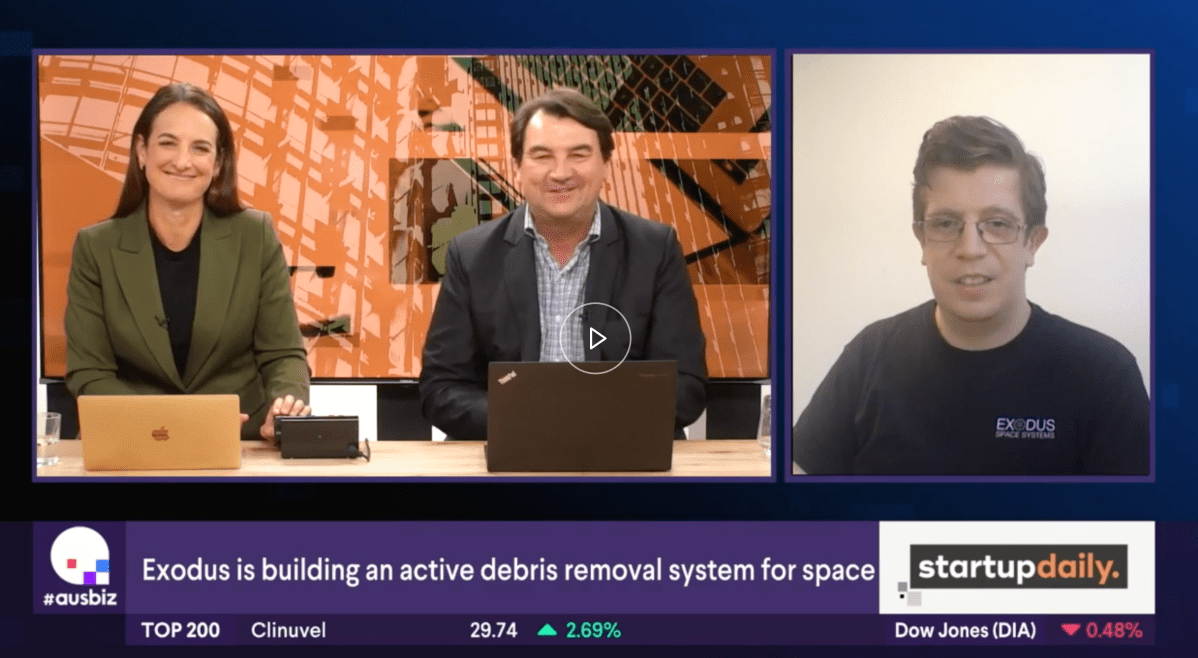
Let’s start with a number of fun interviews where Mike talked about Exodus’ space debris solution with Startup Daily (title image), about the feud between Elon Musk and Jeff Bezos with 6PR host Liam Bartlett (link now removed), and also Mike’s views on the creative process with If Innovation could Talk (video below):

Mike is interviewed by Eva Chye on “If Innovation Could Talk”

On the business side, we were very fortunate to have our first angel investor funding support this year, which gave us the means we needed to begin work on our KiSSD benchtop prototype, and we are now iterating towards the cost effective solution for space debris. It’s been fantastic to welcome our new intern Alex to the team, and we hope to have more to say on our progress in the new year.

A major part of our progress this year was the less-exciting-but-still-very-necessary work required to set up the accounting back-end and documentation processes required to claim our first R&D tax rebate (a must for any tech startup). As a result, we have now achieved the status of Early Stage Innovation Company (ESIC), which comes with tax benefits for our future investors.

In the last few months of 2021, we were focussed on a number of applications, from grants, to equity funding (both of which we hope to have announcements soon), and other programs, including our successful application to the Innovate to Grow: Space program, which is being run by CSIRO in association with the Australian Space Agency! From December 2021 through February of 2022, Exodus will work with other space-focussed startups and SME’s around Australia to further develop our KiSSD solution, but also explore collaborations which will benefit the broader Australian Space Industry.

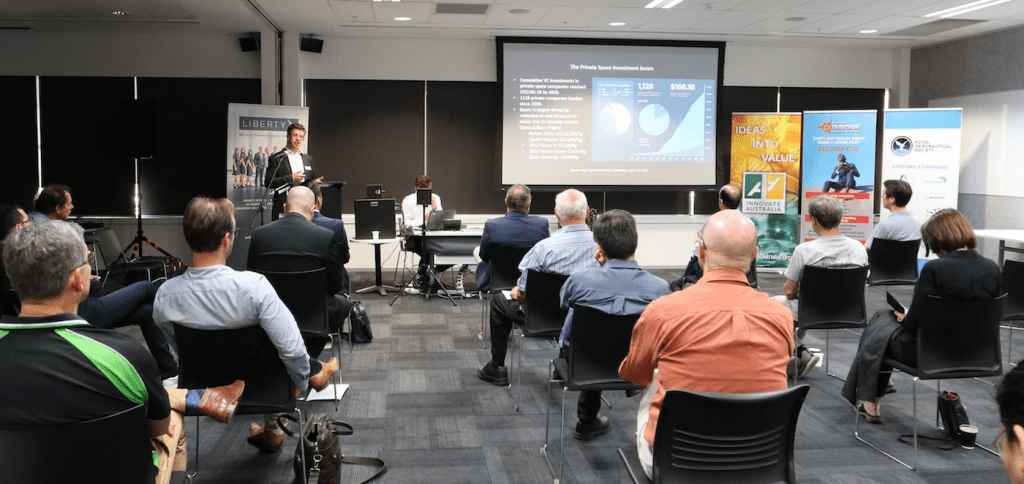
Also in the second half of the year, we were a part of setting up the new WA Space Forum (LinkedIn, Facebook) which had its inaugural event on the 29th of October. Our guest speaker was Dr Benjamin Kaebe of Space Industries (pictured), and it was a well attended and received event. Our thanks to everyone who came!

As the year draws to a close, the team at Exodus would like to wish everyone a happy holiday season and hope the new year bears fruit from all the hard work we’ve been seeing everyone put in. Onwards and upwards!

Onwards to 2021!

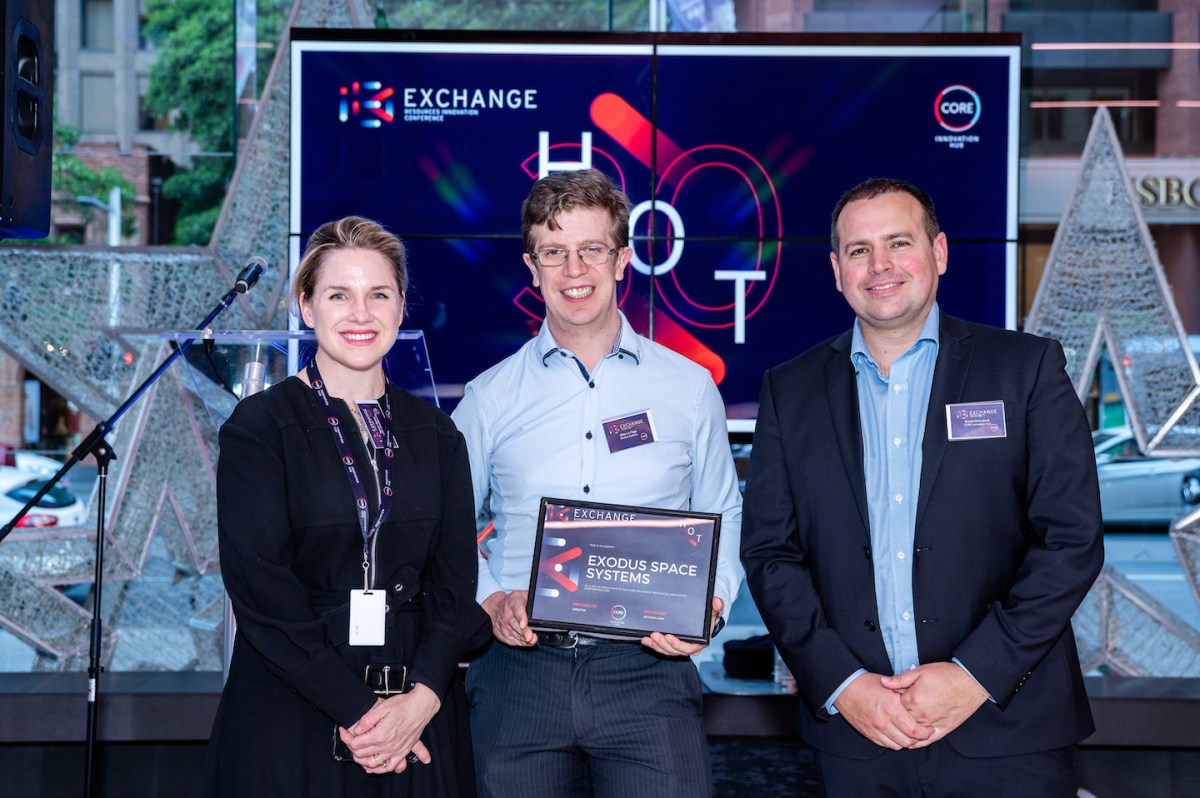
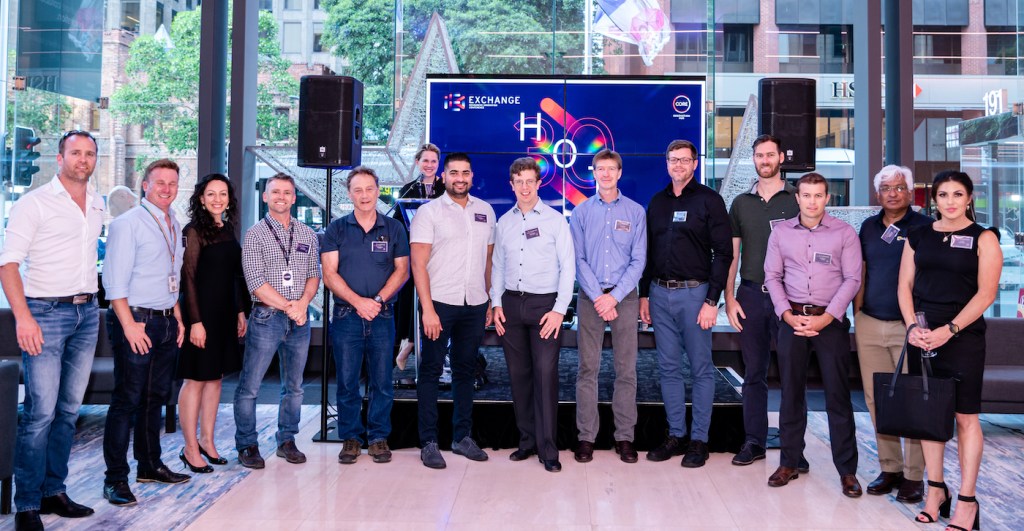
As 2020 comes to a close, I’m sure many will be happy to see it go, but for us at Exodus it has been a year of solid progress, capped off with the honour of being named a Core Exchange “Hot 30 company to watch” in 2021. It’s been phenomenal to have recognition from supporters both in Australia and abroad, and we’re excited to see how we can improve on it next year.

Representatives of Core Exchange “Hot 30” companies, at Core Perth, December 2nd, 2020.


Our key focus this year was making sure we’re not just promoting “a solution in search of a problem”. Instead, we need to make sure we have a strong case to convince ourselves (and everyone else) that a space debris cleanup service can pay for itself as a business, not just be a research project. Our optimism that we’re on the right track is based on three factors:

  1. Space debris cleanup will eventually be an essential service required by all space operators. The new space industry is going through a period of rapid growth, and is projected to exceed $1 Trillion US dollars annually before 2040. There is a gold rush atmosphere at the moment: hundreds of new companies are being founded to capitalise on increasing global demand for space services. These services are possible because of advances in miniaturisation, as well as cheaper and more reusable launch vehicles.

    We consider our position to be similar to that of Levi Strauss, who sold denim jeans to gold miners in the 18th century, because space debris cleanup will provide value to all space operators, and our aim is to be the premier provider of space debris cleanup services. One estimate already places space debris cleanup at 1% of the total space industry, indicating a $6 Billion US dollar space debris cleanup industry by 2029.
  2. Exodus Space Systems’ Kinetic Solution for Space Debris (KiSSD) can outcompete other Active Debris Removal (ADR) services. The KiSSD method requires an effector craft to perform a flyby maneuver, placing a column of low density solids in the path of the targeted debris, impacting it at a speed fast enough to transfer kinetic energy, but slow enough to not fragment it. This slows the target down in a manner akin to a truck arrester bed. The debris then falls back into Earth’s atmosphere, where it burns up like a meteor. Doing this gives us three key advantages over other ADR methods: Cost-effectiveness, Scalability and Safety.

    a) Cost-effectiveness will be measured by the ratio between mass of payload launched, versus mass of space debris removed. Because KiSSD flyby maneuver saves propellant and robotics mass through not having to rendezvous with or physically capture the target, Exodus’ cost of service will remain lower than its competitors and more cost-effective for the vast majority of smaller debris objects in low Earth orbit, even as the prices of launch services decrease.

    b) Scalability will be measured by the incremental cost of performing additional debris target removals in a multi-target mission. In the KiSSD method, the low density solid particles are generated from a simple fluid consumable, meaning that the particles are “dumb” and no space grade robotics/electronics is lost with each target. Also, the orbit of the effector spacecraft is such that removing additional debris targets within a given orbital cluster will use significantly less propellant. This creates a compounding effect where a multi-target KiSSD mission can be significantly cheaper than the equivalent ADR mission run using a competing technology.

    c) Safety will be measured (among other things) by the timeframes involved. Because KiSSD is designed to require only a single pass for most small targets, the method will be preferred when the debris target is posing a hazard in a congested orbit, such as could be the case with so-called “mega-constellations” of satellites currently being planned and launched. Once the target has been “KiSSD”, we expect that even targets in orbits at altitudes of 600km-1200km (the main bulk of space debris in low Earth orbit), will be deorbited in timeframes of less than 3 months, greatly reducing the risk posed to satellites and crewed space stations below.
  3. The KiSSD method enables a new business model in response to the question of “who pays?” Whilst this question is often asked rhetorically, we argue there is now evidence of willingness to pay to solve this problem (see the comments by Iridium CEO Matt Desch, the Series E funds raised by Astroscale, or the European Space Agency’s contract with ClearSpace). What has been missing is a commercial business model which will incentivise key stakeholders to participate in arrangements to fund such commercial missions, and this is what we think the cost-effectiveness, scalability, and safety aspects of the KiSSD method will enable Exodus to achieve.

    The four key stakeholders who stand to benefit from space debris removal are 1) spacecraft operators, be they satellites or crewed space vehicles, 2) entities with ownership of, and liability for damage caused by existing space debris (most likely also spacecraft operators themselves), 3) satellite insurance providers, who face a significant disincentive to raise premiums further to account for space debris collision risk (or the operational costs of expected excess conjunction avoidance), and 4) government space agencies and/or defence agencies, who through treaty or security imperatives have sought to encourage action to address the problem. 

    Each of these stakeholders derive different value from the removal of space debris, and as with any problem like space debris, it is important to incentivise all of these stakeholders in order to achieve success. Our development of the KiSSD method – with its unique advantages as listed above – give us insight on how best to provide maximum possible value to each of these stakeholders in our planned multi-target debris removal missions, and we look forward to working with all of these stakeholder organisations in the coming years.
Mike presents at the Innovation Australia “Flying Things” summit, at Liberty Centre Perth December 16th 2020


Along with our Core Exchange “Hot 30” award, we’ve received letters of support from a number of Australian organisations which we hope to talk more about in the new year. We’ve submitted a grant application to the Australian Space Agency’s Moon to Mars Demonstrator Feasibility program, and we look forward to hearing the results of that in coming months. Pictured above: Mike speaks at the (socially distanced) “Flying Things” summit hosted by Innovation Australia. It was an honour to be invited to speak along with some of Perth’s great innovators in aviation.

Lastly, I must mention our Youtube/Patreon crowd funding campaign, where our Starship Design Speculation videos have now been watched over 300,000 times! We have a small group of individuals funding Exodus to produce more videos, and these are in progress. The next video will be speculation on how a point-to-point transportation system may actually work with SpaceX’s reusable Starship technology. It’s such an exciting venture to think about, not just because of its potential to help drive the various Moon and Mars programs in progress, but also what it will do to expand the human use of low Earth orbit, and the technologies that will benefit all of humankind.

Here’s wishing you and yours have a happy and safe holiday season, and a chance to reach for something greater in 2021. Happy New Year!

Coronavirus and the origins of the Exodus Vision

Since social isolation is a precondition of space travel, astronauts are some of the individuals best equipped to deal with its challenges. Does that mean that going through the COVID-19 pandemic is making all of us that much more prepared to travel in space?

If you’ve been following our story, you know Exodus Space Systems is a company which is developing a new method to solve the space debris problem, and we think this will be a big part of the space industry in coming decades.  But let’s put that aside for a moment and talk about our long-term vision for humanity in space, the origins of that vision, and how a pandemic like COVID-19 relates to that.

If I had a time machine, and we could go back to the significant moments in my life which eventually led to the genesis of Exodus Space Systems, at least one of them would be in the early 2000s when I was an undergraduate studying Molecular Biology at the University of Western Australia, learning about pandemics and why they can be so devastating.

As is abundantly obvious now, the adaptation of a new virus to the human species is an event against which our modern healthcare system is relatively slow and ill-equipped to react.  For at least some time after human-to-human transmission begins, we are limited to fighting the disease with much more primitive tools: social distancing to stop the spread, and artificial respiration to give the most serious cases a better chance of survival.  It’s like trying to fight a forest fire with firebreaks and heat blankets alone.  Eventually it is necessary to bring in the water (vaccine).

Over the last century, humanity has been becoming increasingly susceptible to the spread of a virus with these characteristics (long incubation times, asymptomatic/low-symptoms transmission) because our modern world is extremely interconnected through trade and travel.  It’s not at all surprising to anyone who’s been paying attention that the measures which are necessary to control the virus have had such a horrific effect on the world economy.  The warnings have been out there for years, concerning the what, if not the when of it.  Those who say “nobody saw this coming” are in effect, proclaiming their own ignorance.

It is worth repeating what many visionaries and futurists have pointed out before: Humanity as a space-faring civilisation would be inherently more resistant to pandemic outbreaks, in part because of the time-frame over which space travel occurs.  As soon as humanity has self-sustaining outposts on the moon, Mars and elsewhere in the solar system, the transit times to go between these places would in most cases exceed the incubation times of every infectious disease known.  There are few plausible ways an infectious agent could infect a significant proportion of the human population when social isolation is a necessary pre-condition of space travel, so the relative cost of a pandemic to society would be much smaller.  The exodus of humanity to space is beneficial, not in the biblical sense of running away from an existing plague, but in the pragmatic way that the space between us creates barriers to any new infections that might arise.

I would also add that round-trip travel times to every destination beyond the moon will require far more significant measures to sustainably support other aspects of human health over the long term, including measures to address radiation-induced cancer risk, microgravity-induced biomedical issues, and the need for fully (or near fully) closed-loop environmental control and life support systems.  In the long-term, I believe the most plausible vision for humanity is of a solar system network of space settlements which are linked by an information economy, but largely separate in their material needs, since even cargo transport costs will remain prohibitively high and transit times will remain prohibitively long with foreseeable technology.

As difficult as this may be, it is still worth doing!  The process of making humanity a space-faring civilisation will not only protect us to a far greater extent against the infectious pathogens which have brought human civilisations to their knees in the past, it will also teach humanity how to be truly sustainable. This integration of sustainable practice into the cutting edge of our technological development processes will go a long way towards solving the other existential issues which now trouble humanity.

Space travel is better positioned to drive this kind of thinking into high technology than any other endeavour.  If every bi-product of every energy generation or production process was treated with the same consideration that led space scientists to figure out how to recycle human urine for drinking water, we would be far better placed to solve numerous challenges, including human-caused climate change.

This is why the Exodus vision advocates space exploration and human settlement of the solar system, not just as a dream for rich men, but as a goal for humanity that will benefit all of us.

Going back to my time machine journey, I didn’t know at the time what form it would take, but it was during my studies that I became convinced that humanity needed to go to space as a matter of priority, and that I wanted to find a way to be a part of that.  Another important influence for me was the 2004 X Prize, which planted the seed in my mind that maybe a start-up company was the right vehicle to do innovative things in space, and that I wanted to be a part of the “New Space” movement.  Being an Australian scientist however, I had no idea yet how I might make that happen.

With each successive space event I attended, my knowledge of the industry grew, with particularly strong memories of meeting the Armadillo Aerospace team at the X Prize cup in 2007 and learning why returning rocket stages to a pad via vertical landing was so much more efficient than horizontal (wing-based) landing.  It’s with that knowledge that seeing SpaceX perfect this process to a fine art has been incredibly satisfying to watch.

The International Space Development Conference in 2011 was another major step for me, as this was the first time I presented at a space conference (my Carousel Space Station concept).  Highlights included getting to meet Buzz Aldrin, having a great chat with Al Globus on his space settlement concepts and being incredibly inspired by Jeff Greason’s Keynote.

Eventually, I came to know the two co-founders of Exodus Space Systems, Carl Conquilla (we met at the NASA space apps challenge in 2016) and Alexius Julian (we met through Perth’s Latin dancing scene in 2015 and bonded over science fiction when he found out about my Firefly Season 2 pilot script).  Initial discussions between the three of us became ongoing talks, and upon completion of my PhD, we founded Exodus Space Systems.  That was in August 2017, and the rest is history.

The outbreak of the COVID-19 pandemic, while it presents difficulties for us as a start-up company, is an interesting experience for me personally, since it feels like I’ve come full circle on why I think the exploration and settlement of space by humanity is so important.  Indeed, the recent return of the ISS expedition 62 crew highlighted not only how much the world has changed in the last 6 months, but also how accustomed to social distancing measures the astronauts already are.  I’d also point to these comments by Australian Astronaut Andy Thomas on how his space experiences apply to what we are going through now, especially the importance of having a daily routine.

The social distancing requirements we are all experiencing right now would simply become a new normal if space travel across the solar system were to become a common thing.  Also – in case you hadn’t already figured it out – the answer to the question I posed at the top of the article is a giant “yes! I’m sure this pandemic has made us all just a bit more prepared for space travel”.  Of course there are elements that are more difficult to deal with, but we are collectively proving that adaptation is possible, if not easy, when we have a sense of shared purpose.  I can only hope that when we come out the other side of the pandemic, we can reapply ourselves to the goal of space exploration and settlement with redoubled energy.

Currently, Exodus Space Systems is participating in the (now online) accelerator programs being run by both CERI and Quantum Tech Exchange, and we are continuing to develop our understanding of the space debris problem, and those who will benefit the most from our solution.  There’s more to come, so stay tuned!

Quantum Tech Exchange success!

The Exodus team is proud to announce that we’ve been accepted into the Quantum Tech Exchange Accelerator, which is run by Atomic Sky.  This includes a full professional development program, with visiting speakers and mentorship, as well as site visits to key tech facilities in WA.  We’ll be there at the AOG conference and the WA Europe Innovation Summit, and will finish with an opportunity to pitch to investors.

The cohort itself has already proven itself to be a diverse group of businesses, and I’m looking forward to meeting and working with all of them further.  You can find out more about the group in Peter Rossdeutscher’s LinkedIn post announcing the program.

Here’s to a great start to 2020. Onwards and Upwards!

Exodus at the Space Innovation Network

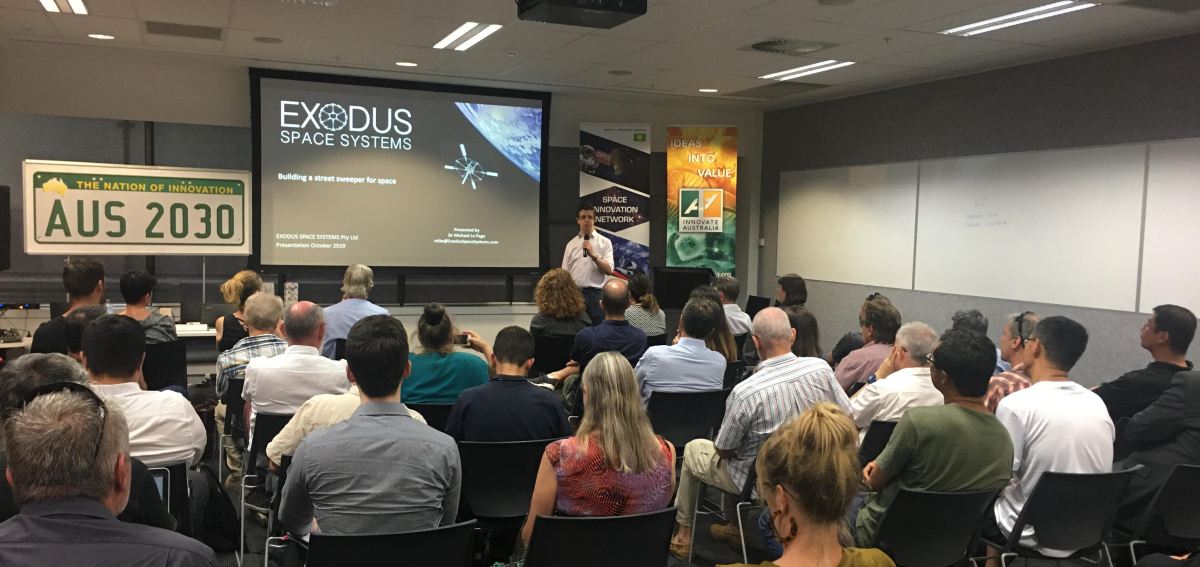
Our last public event for the year was on Tuesday 17th of December, with Mike giving a speech on our Kinetic Solution for Space Debris (KiSSD) method at the Space Innovation Network, which is run by Innovate Australia.  A huge thank you is owed to Peter and Adam, both for this invitation to speak, as well as their ongoing support over the last few years.  Congratulations also to Joshua Letcher, CEO of Space Industries, who joined Mike in speaking at this event, and showed some exciting plans for their construction of a new space precinct at the Perth Airport West, which they’ll use as a base for their plans to mine Helium-3 from the moon.

2019 has been the biggest year yet for Exodus, with our trips to London Tech Week and our participation in the Australian finals of Pitch at Palace being obvious highlights.  The number of extraordinarily talented entrepreneurs at these events alone has been a huge inspiration to us.   We’ve also given speeches at a number of other events, continued to explore funding opportunities, and kept our research ticking along in the background.

As we close out 2019 and think about what 2020 will bring, I (Mike) want to take a moment to wish everyone a happy holiday season on behalf of the whole Exodus team.  We could not have made it this far without the encouragement of our mentors and supporters, so all the best to you and yours, and let’s hope that 2020 sees us all achieving our goals, and more!

Pitch at Palace reflections

What a gigantic fortnight it has been!

Exodus Space Systems has been busy selling our idea of a street sweeper for space in a variety of different forums, and meeting some absolutely amazing people along the way.  The most high profile of these was the Pitch at Palace pitching competition, run by a magnificent worldwide organisation which was set up by his royal highness Prince Andrew, the Duke of York, in 2014.  The 2019 Australian final was hosted at Perth’s government house by WA Governor Kim Beazley.

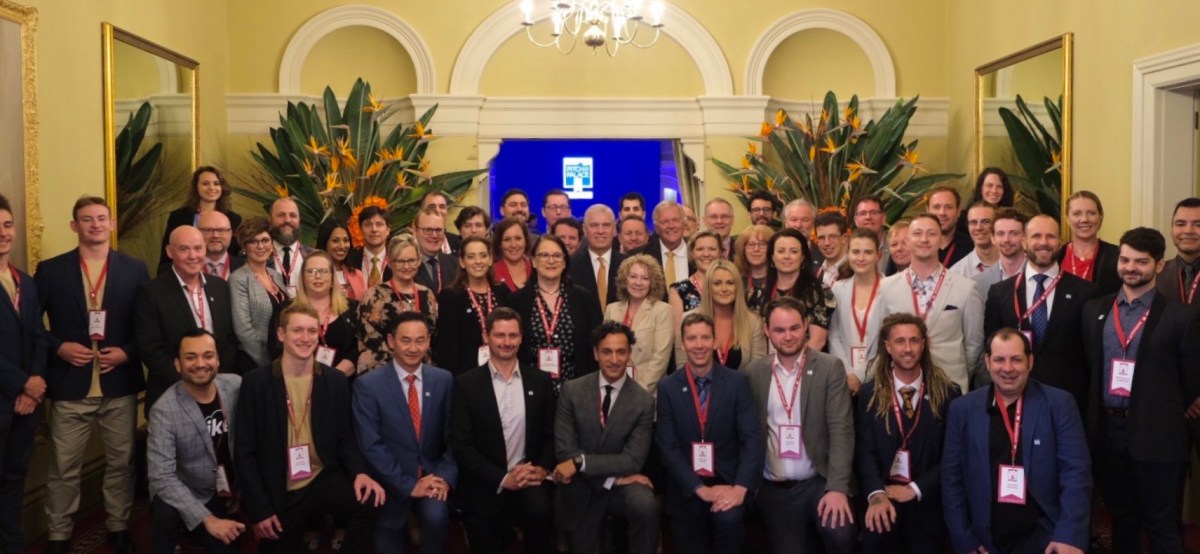
If you’ve been reading our previous entries you’ll know that in the last week of August we pitched in the WA state final of Pitch at Palace, and as a result were selected to participate in the Australian national final on October 4th – also in Perth.  At the time, we thought we were one of the 8 WA companies selected to be amongst the 42 Australian finalists, but as it turned out, there were 13 WA companies in the final!  This was because of the wildcard system, as well as several WA companies flying interstate to qualify through other state finals.  Even though it’s a long list, I do want to acknowledge each of them individually because it was the amazing people behind these companies that made the experience what it was, and I think it’s important to acknowledge the increasingly thriving entrepreneurial scene in Perth.

First among the WA companies was eventual global finalist Orthocell, which has done some amazing work in nerve regeneration.  DiGii is social media for year 5-6 students with AI moderation to address bullying and other forms of abuse.  Noisy Guts uses a special belt sensor to non-invasively detect irritable bowel syndrome and other gut conditions.  Quipmo is recreational equipment for the moment: an online rental marketplace for travelling fun-seekers.  The Volte is a high fashion online rental marketplace that helps reduce clothing waste.  Jugglr is an online jobs platform to help new mums get back into the workforce.  Kinchip Systems improves health outcomes with better medical data management.  Assisting Your Life to Achieve (AYLA) Inc‘s “You Matter” boxes make possible the 24/7 assistance of homeless and disadvantaged people.  The Difference rounds up your electronic purchases to the nearest dollar so you can contribute “spare change” to charities of your choice.  Virtual CSI is using virtual reality as a tertiary teaching tool for crime scene investigation, MARKR Systems allows easily updatable and translatable augmented reality signage at events, and Gelavo saves food wastage by turning ugly avocados (and other fruit rejected for cosmetic reasons) into a healthy snack.

And THAT was just the WA cohort.  The two other global finalists came from interstate with powerful stories, and these were Soldier.ly who use technology to detect stress and anxiety in returning veterans, and Xceptional, who have an online jobs platform for people on the Autism Spectrum.  Additional companies from interstate who really made a strong impression on us included Augmented Bionics, who are building a non-invasive alternative to the cochlear implant.  Capricorn Power have developed a new way to convert waste heat to energy, potentially having a massive impact on climate change mitigation efforts.  Cynch helps small businesses deal with cybersecurity issues through customised programs.  Ecoblends Australia is working on a beautifully simple concept of colour-changing toilet paper to detect a number of gut-based cancers and other conditions.  Farmwall uses the power of aquaponics to bring healthy snacks into the office.  GoAct has some potentially game-changing technology for using the biomarkers found in a simple blood test to diagnose mental illness.  GoNap is a boon for parents of young children with an eco-friendly and very portable nappy kit.  HackHunter has some nifty tech to help offices secure their wifi networks by detecting malicious devices.  Kognat uses very impressive deep learning techniques to automate video editing processes.  SensaWeb has a realtime environmental radiation monitoring solution for workplaces where radiation sources are in common use.  Tendril Care is a platform for aged care service which aims to solve the more inefficient aspects of that industry, and Wheel Alert Technologies has a simple sensor for realtime monitoring of truck brake condition which will save lives and money.

The entire event was streamed live on YouTube, and you can watch it here (Exodus is on stage at 1:40:40):

We’d like to repeat our congratulations to the three companies who made it to the global finals in London, and especially would like to thank all the organisers at Pitch at Palace, as well as staff at Murdoch University for making this a well-run and an incredibly valuable event.  At least two outcomes from Pitch at Palace have resulted (in the week since Pitch at Palace) in new conversations with – and pitches to – potential investors.  Also, as we requested in our ask, we’ve now begun conversations with corporations who have both the ability and interest to help commercialise the technologies we are developing.  Hopefully more to come on this soon!

Lastly, it was a pleasure to be invited to speak at UWA on Wednesday, 9th of October for the Australian Institute of Physics (WA) quarterly meeting.  Being able to speak for one hour (rather than the 3 minutes or 30 seconds at Pitch at Palace) was quite a different kind of presentation, and it meant being able to do a deep dive into Exodus’ technical plans with a number of scientists present, which led to some very good audience questions! One unexpected result from this is that we’ve had a request to speak to some school kids about the exciting things that can happen when you study STEM subjects, which is something we’re definitely open to doing more.  If you want to know more about this, or want to hear more about why Exodus would be a great company to invest in or sponsor, please get in touch!

Exodus at Bloom and on 6PR radio.

A really important aspect of any public outreach work that Exodus does is helping to normalise the space industry as something real and tangible that can be invested in, provide valuable outcomes and jobs to “ordinary” people.   We’re helping to communicate the important message that if you work in the space ecosystem, you no longer have to fit into the mould of “the right stuff” Apollo astronauts and rocket scientists in order to participate.  We all use the internet, GPS, weather and other satellite-provided services, so we all have useful feedback to give as to how these services can be better.

Take the exciting recent announcement of a further $150 million being allocated to the Australian space Agency  – funds that will help Australian companies participate in NASA’s Artemis program that will return humankind to the moon.  Maybe this will build on Australia’s mining & remote operations experience, our business innovation sector, our world-class scientific researchers, or all of the above, but you can bet that this will have massive knock-on effects throughout the economy and our society more broadly.  The aim is to triple the size of the Australian space sector to $12 billion and create around 20,000 extra jobs by 2030.  Those aren’t all going to be high tech jobs, but it is important that people have a better intuitive feel for some of the quirks of working in the space environment.

It was great to talk to students at the Bloom WA entrepreneurial hub about what Exodus is doing to solve the Space debris problem, as well as Mike’s personal entrepreneurial journey, including what we learn’t from our recent trip to London Tech Week with Startup Catalyst.  We started with a video of the well known game and space-simulator, Kerbal Space Program, showing a replay of the test Mike (yours truly) gave himself years ago when deciding to switch fields and join the new space industry.  Did I understand (at least in theory), how we landed men on the moon, and returned them to the Earth safely?

If you can do this in Kerbal Space Program – I recommend this test to anyone interested in improving their knowledge about space – then you understand many of the issues of operating in space, even if – like us – you only plan to work on the rocket payloads.  Exodus might have no plan to design or operate rockets, but we will certainly need to have a good understanding of those requirements.  Narrating this video I was able to talk about the need to use rockets in stages (the parts of the rocket that get used up, then break off and fall away), and how – simply by the nature of what is required to get to space – this has created a significant amount of space debris all by itself.

Another important aspect demonstrated was how using simulators like drives the development of an intuitive understanding of orbital dynamics – since nothing in space moves in straight lines – and also how to make two objects meet in space at a given time and place.  It is this understanding that led to Exodus’ Kinetic Solution for Space Debris (KiSSD), which is different from other space debris removal methods in that we have no plans to match speeds with each piece of debris – a process which requires extra propellent and inhibits the scalability of the debris removal process.  Understanding how to remove space debris kinetically with a low speed flyby (~200m/s) whilst still taking care not to fragment the debris, is a key aspect of the method, and the basis of why we think we will be able to leapfrog the competition in the growing space debris removal market.

Lastly, it was great fun to be invited to speak with Jon Lewis on 6PR radio, who invited me onto the show to talk about space debris for his late-night audience, and answer a few questions from his listeners.  Always a breath of fresh air to talk to, Jon is doing some great work helping people to think about topics that might not normally come up.  We might be up to our eyeballs in planning and applications, but we’re always happy to come talk to an interested audience, and there are a few more engagements coming up, so contact us if you’d like to know more.

Pitch at Palace Video

Thanks to Launchpad at Murdoch University, we now have a video of Mike presenting the 3-minute pitch that took Exodus through to the Australian national finals for Pitch at Palace.

We’d like to thank all the organisers for the opportunity to be a part of this group of incredible entrepreneurs, and we’re excited to see how each of these companies do in the future!